

Genevieve Timmons
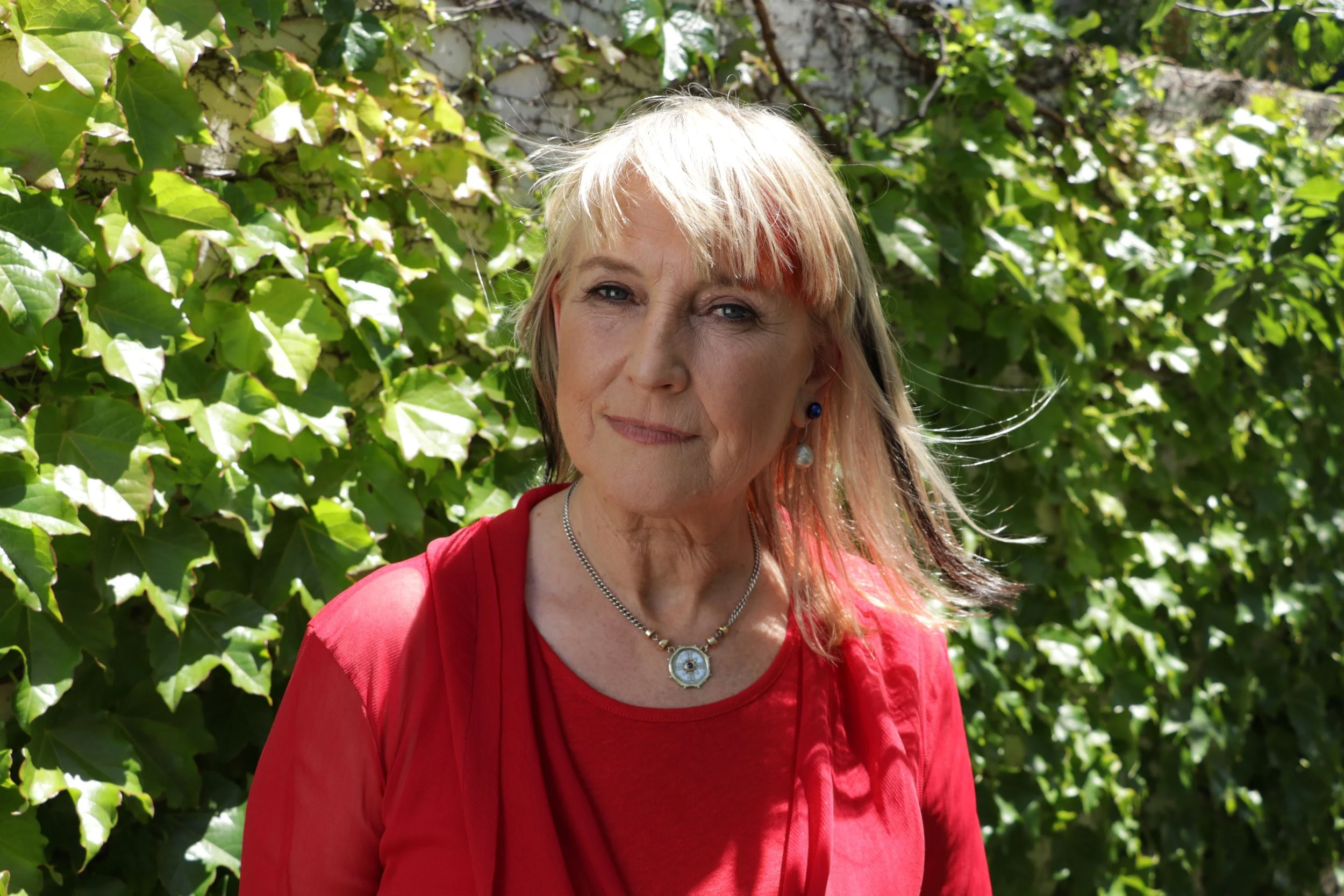
Ph. Zara Falkiner-Rose
Stranger #15
Genevieve Timmons , philanthropic expert and consultant, author of Savvy Giving
Genevieve and I first met over a phone call and soon decided to continue the conversation in person. Her openness and welcoming attitude immediately reminded me of my father’s side of the family – that particular kind of care and generosity that comes from people who know the true value of human connection as a support network. Genevieve’s professional journey is deeply intertwined with her personal background, which is probably why she is so passionate about what she does. She has a natural empathy for people, and this sensitivity clearly shapes the way she works and collaborates. Her career is an extraordinary story: over the years she has worked with and supported many important institutions across Australia, New Zealand and internationally. Always committed to transparency in philanthropy, she has consistently shared her knowledge and experience with others. Her latest project, Savvy Giving, is a practical guide to navigating contemporary philanthropy – yet another expression of her generosity. In this conversation, Genevieve reflects on how philanthropy has evolved over time, how people perceive and engage with it today, and why co-design and genuine community involvement are essential for creating meaningful impact.
How would you introduce yourself?
This gets harder as I get older. Earlier in my life, I would have said I was a program manager, a CEO, a consultant, or a board member. As time has gone on, I’ve realised there are many layers to my work life, and at the core of it all it’s easiest to say I’m a philanthropic executive.
But the most important thing is, it really depends on who I’m introducing myself to. To some people, I’d say I’m an advocate for generosity and structured, effective giving. To others, I’d say I’m an experienced teacher and trainer. And to others, I’d say I’m committed to building a society that is just, sustainable, and creative.
What I know now, and I think this comes with age, is that who I am is relevant to people wherever they are in their lives.
And I’d also add that I’m a mother, a grandmother, a sister. I’m a neighbour, I’m a gardener, and I love my chooks. All of that is part of who I am.
You’re recognised as a pioneer of contemporary philanthropy in Australia and New Zealand, and you’ve worked with more than 50 organisations. How did your journey begin, and what were the key moments that led you to where you are today?
I think there are really two answers to where my journey in philanthropy began.
When I was born, I was lucky to become part of a family where generosity was deeply important, even though we didn’t have much money. No-one ever told us we were poor, but we were, financially at least. Dad and Mum survived from week to week. There were five of us kids, and looking back now, I see that my life began with sharing and generosity. Even when we didn’t have a lot, mum and dad would always say, look after everybody else, that’s what matters. It wasn’t about how much we had, but about whether we made sure everyone was okay.
Alongside that, I received a powerful education, educated by the Brigidine nuns, where there was always a strong sense of social justice and of something being more important than the individual. That early grounding in generosity and collective responsibility has stayed with me, and I’m very grateful for it.
When I began working in philanthropy as an adult, I had already been involved in community projects. I’d finished university, I was a young mum, and I felt drawn to people committed to building things that worked for everyone –truly including everyone.
One of the most formative early chapters was my involvement in the CERES project in Brunswick, where I worked for five years with other people to get it started in the late 70s. CERES came together because people from many different backgrounds – community organisations, government, education, universities, and the local neighbours – shared a vision and contributed their influence to bring together the CERES project. Everyone brought a piece of the puzzle, and together we created what is now an extraordinary community asset.
The site itself had once been a bluestone quarry, then a tip site, before the community transformed it into what it is today. Funding came from many places, including the Ross Trust, the Reichstein Foundation, state government, local council, and RMIT, showing what’s possible when philanthropy and community work together. There are now more than 600.000 visitors to the CERES site, which is a hive of activity for school groups, social enterprise businesses and the general public to come for the markets, the plant nursery, the cafe, the community gardens, low energy displays, bees, chooks and much more.
Jill Reichstein from the Reichstein Foundation later invited me to work with the Foundation for what was meant to be 12 months. I didn’t really know what I was saying yes to, but I ended up working for 14 years. Those years were incredibly formative, both professionally and personally. At the time, philanthropy was still largely random acts of generosity rather than a structured profession, and I learnt an enormous amount working alongside others.
In 2000, I was fortunate to work in New Zealand as a consultant, where I met extraordinary colleagues and saw philanthropic giving evolving in thoughtful and intentional ways. Many of us were beginning to see philanthropic capital as a form of investment in society – one that needed care, clarity, and purpose to deliver impact. As the sectors in Australia and New Zealand expanded, there was clearly a gap in the knowledge and training for people who worked in philanthropy, and the search was on for ways to agree on standards and practice. In 2010 I worked on my first professional development publication, The Grantmakers Toolkit Ritenga Tuku Koha, commissioned by Philanthropy New Zealand. This publication was a seminal work, outlining essentials on the grantmaking path for foundations, trusts and private donors.
After that, I spent another 14 years at the Portland House Foundation, led by Stephen Hains. There, I learnt what trust-based philanthropy could look like: a light touch, strong partnerships, and a deep belief that trust and shared commitment lead to the best outcomes. I have since worked with the Naomi Milgrom Foundation and Philanthropy Australia. My last major appointment was with the Paul Ramsay Foundation, which at time of establishment emerged as the biggest philanthropic foundation in Australia by a country mile.
All of these experiences together shaped how I think about philanthropy today.
What has been the greatest challenge you have faced?
My greatest challenge - and one that I thrive with - has been working with people as they move along the continuum toward more effective and impactful philanthropy , or “savvy giving”.
I’ve been engaged in this work for a long time – starting with the Grantmakers Toolkit in New Zealand in 2010, then the first edition of Savvy Giving: The Art & Science of Philanthropy in 2013, supported by Marion Webster, Sarah Davies, Maree Sidey, Trudy Wyse and many others. At that time, conversations about effective grantmaking and philanthropic practice were still very new in Australia. The first edition of Savvy Giving was a ‘how to’, demystifying and mapping out the terrain of philanthropic giving, and opening up great recognition of what has been a largely invisible and often confusing field of endeavour.
When I sat down to work on the new edition of Savvy Giving in 2024, initially thinking I’d just update a few dates and add some new stories, I realised how dramatically the philanthropic landscape had changed since the first edition of Savvy. The number of people working in the field had grown, the amount of money involved had increased exponentially and was more publicly visible, there was diversity in approaches to effective management of philanthropic dollars, and the complexity of the challenges had all grown significantly.
One key thing to note is if we are serious about philanthropy as a way to invest in society, we sometimes have to step into the hardest issues: recognising injustice, understanding where systems are failing people, and being willing to engage with those realities rather than simply giving around the systems that hold these problems in place. I’m not critical of giving – every dollar matters – but knowing how to ensure our giving is truly improving things in the long term is difficult. It requires focus, patience, deep listening, and a willingness to support work where results may take time.
That kind of philanthropy often requires what I call “patient money”, accepting slow-burn outcomes and trusting long-term impact. We have strong examples of this, including CERES and many other stories shared in Savvy Giving, where pushing against barriers and closed doors has led to meaningful, lasting change.
Ultimately, the challenge is understanding where people are and learning how to walk alongside them. Philanthropy has often been seen as glamorous, but the real influence lies in recognising how powerful money can be when it’s used thoughtfully, not just to give, but to create and sustain change. And that challenge is always different for people, depending on where they become involved.
Philanthropy has changed dramatically over the years. How do you define or frame philanthropy today?
At its broadest, philanthropy means “love of humanity”, and I like to go back to those latin roots and hold us all to that definition. Philanthropic dollars are the only dollars explicitly linked to the love of humanity. This contrasts with money for commercial profit, or money spent by the government, and that’s where the strength and purpose of philanthropy is uniquely placed. I think it’s important to remember the historical bones of philanthropy and then build on them with what I call “savvy giving”.
For me, philanthropy today is about love of humanity expressed through a public commitment to justice, sustainability, and ensuring that everyone thrives in society. If we’re not aspiring to that kind of society, I question how we test our effectiveness with philanthropic dollars. Our philanthropic giving falls short if we are creating winners and losers,or if we are supporting activities that damage communities. That isn’t love, it’s something else.
Savvy giving also means thinking more broadly about savvy money. There are four ways we use money. The first is savvy spending –what we buy and how we spend our money in alignment with our values. The second is savvy saving –where we keep our money, which bank we choose, and where that money sleeps. The third is savvy investing –how and where we invest, including ethical and impact investing, recognising that the movement of money in markets can help shape a society that works for everyone. People are becoming increasingly thoughtful and informed about this. The fourth is savvy giving – how we give our own money, or how we support others to give theirs. Alongside this, philanthropy today also includes volunteering, pro bono work, and the donation of time, but my career focus is really on the flow of dollars: where money goes, and whether it’s connected to building a sustainable, creative and fair society or not.
I often return to a quote by Cornel West, who says that “justice is what love looks like in public”. That relationship between the private and public expression of love deeply interests me when we look at the role for contemporary philanthropy.
Finally, an exciting focus for philanthropy today is also about building community wealth –when groups of people collectively manage resources in ways that strengthen society. We see this through the rise of community foundations and shared community assets like CERES, where resources are harnessed for the benefit of everyone. Whether through arts, education, health, housing, or other social activity, all of these can be expressions of contemporary philanthropy.
Many people still associate philanthropy mainly with generosity. Do you think public perceptions have changed? Where do you see gaps in understanding, and how can they be addressed?
I think the word philanthropy itself is often confusing or misunderstood, especially by people who don’t work in the sector. It’s a difficult word to pronounce, it feels obscure, and people sometimes wonder whether we should replace it. But no alternative has ever really worked. Just because a concept is hard to describe doesn’t mean we should abandon it. Some of the most important ideas are complex, and I’m a strong believer in owning the word, learning it, and embodying it by showing people what philanthropy actually is.
One persistent misunderstanding is that you can only be a philanthropist if you’re extremely wealthy. That simply isn’t true. Anyone with money –whether it’s $50, $50,000, or $50 million– can participate in philanthropy. One of the most exciting developments in recent years is the democratisation of giving, where people have agency through their money. We now have structures that support both modest and large-scale giving, including community foundations and collective giving models, which allow people to pool resources and participate meaningfully.
In reality, it’s an entire ecosystem. In Savvy Giving I map this out which is a first for Australia. In this ecosystem, there are four key areas of activity: the sources of funding, the people who manage and distribute it (boards, trustees, staff), the not-for-profit organisations and community leaders who create value with the money and turn it into impact, and the organisations that support the system through research, policy, convening and learning, such as Philanthropy Australia and many specialist networks. If we don’t understand this ecosystem, we can’t get the best value from our money.
Finally, I think there’s a risk, as in much of the world right now, that philanthropy becomes divided along ideological lines. I don’t think that serves us well. Philanthropy should be a place where different views can coexist, where people listen to one another, and where diverse approaches are valued. If we retreat into echo chambers, we limit the potential of our money and our collective impact.
At its best, philanthropy is about agency, inclusion, and using resources wisely to build a society that works for everyone. There could not be a better time for philanthropy to take a bold and impactful place in our world, as we face unprecedented challenges and opportunities.
Do you think all of this is well communicated?
That’s part of the challenge, and it’s one of the reasons I put so much time into writing Savvy Giving, running workshops, offering structured knowledge and practice for people to take forward. Both editions of Savvy Giving are the first comprehensive guides to giving in Australia The books are a gift to the Australian Communities Foundation, and in particular to Maree Sidey in her role as CEO, and to Sarah Davies before her. Both of them recognised the need to better communicate what philanthropy is and what it can be today. Maree has since moved to Philanthropy Australia, where she continues to support that same effort, helping to get the message out more clearly and more widely.
Communication is essential, but it’s also hard work. Keeping up with the pace of change, earning trust, and being heard takes time and collective effort. I do think we’re doing better now than we used to. The establishment of the ACNC around ten years ago has made a significant difference, particularly in improving transparency, visibility, and discipline across the charitable sector. That said, the work isn’t finished. There’s still more to do to reach stronger national alignment, and to connect more confidently with global philanthropic trends and learn from international practice.
Things have been moving very quickly. In the past decade we’ve seen enormous amounts of new money flow into philanthropy, at a scale we hadn’t experienced before. One of the risks in that situation is that the money starts shaping the sector, rather than the sector shaping the money. That’s why learning is so important. We need shared principles, common standards, and agreed ways of working. Money on its own doesn’t create value –value only happens when the whole ecosystem comes together to use it well.
So is the message getting out? Partly, and sometimes. One of the challenges is having a shared language. Philanthropy has developed important concepts – for example, terms like systems change, evaluation, impact, lived experience, community-led and place-based philanthropy –and these ideas matter. But the language shouldn’t become barriers or create an exclusive club. The goal is to keep the doors open, to create a clear stepping off point, where anyone can join from where they are and continue learning.
That’s really why I have worked on Savvy Giving, it’s my contribution to building a shared language and understanding that ensures philanthropy works better for everyone.
Transparency is central to your work. How can transparency in philanthropy become more accessible and help democratise the sector?
Transparency is about a lot of things: first, knowing where the funding is, how to access it, who is involved in decision-making, and what happens as a result of the money. All of those elements matter. There is also a strong link between transparency and establishing trust in the public good and purpose of philanthropy. As I mentioned earlier, the ACNC has become incredibly important in this regard, because it required a more public profile for not for profits and also philanthropic grantmakers. When it was first introduced, some people worried it would create unnecessary bureaucracy, but in practice it has done the opposite. It has given us a single, central point of information where you can see who sits on boards, how organisations are structured, and, to some extent, what the money is doing.
That said, transparency is definitely desirable here but are valid reasons for some boundaries. Transparency shouldn’t mean wasting people’s time by encouraging applications for funding that simply isn’t available. Nor does it mean removing all privacy. There are aspects of decision-making that do need protection, particularly for boards and staff who must be able to have robust, honest discussions.
What is essential, though, is clarity. Funders need to clearly state what they do fund, what they don’t fund, and how people can engage with them. When that information is public, it saves enormous time and frustration for not for profits. Technology has helped a great deal with this, and for the most part funders are now much better at communicating their purpose and criteria.
For me, there are three critical dimensions of transparency. The first is access: where is the money, and how do people engage with it? You can’t afford to be vague or opaque about that. The second is impact: where did the money go, and what changed as a result? I think we’re improving here too. Increasingly, we’re focusing on what worked and how to do it better, rather than being afraid of mistakes. Failures, if we’re honest about them, are some of our greatest teachers. The third dimension of transparency is that it invites collaboration and deepens partnership. It also results in reciprocity, because people can connect on a solid understanding of roles and intentions.
One of my favourite stories about this kind of learning comes from Audette Exel, who leads the Adara Development Group in Sydney. In the early days of their work in remote communities in Nepal, they funded the construction of latrines, believing hygiene and waste management were the priority for people who lived two days walk from the nearest made roads. When they returned to the communities to see how their project was progressing, they discovered the latrines were being used to pickle turnips and shelter newborn goats. The latrines project had been redefined by the community to match their own priorities. That experience taught a powerful lesson: transparency, humility, and listening are essential if philanthropy is to genuinely support community-led solutions.
To me, that’s what democratising philanthropy really looks like: being open about what we’re trying to do, honest about what works and what doesn’t, and willing to learn alongside the people we aim to support.
You often highlight the importance of co-design, working with communities as “destination experts.” How does co-design work in practice in philanthropy?
If you think about the rules for successful co-design, the first one is you don’t design ideas away from the table. Rule number one is never to design a program in isolation. Co-design means possibly coming in with a broad intention – for example, strengthening pathways for young people as they move through school and into work– and then starting by asking who is already working in this space, what they know, and what their experience has been. Also, as the specialists, what do they believe would be helpful to advance progress.
The second rule is to be clear about your commitment to funding. Don’t begin co-design conversations unless you already know you will provide resources. Otherwise, you are raising expectations that may not be met, you risk wasting people’s time and valuable resources, and can be extracting their expertise without respect or reciprocity. A general in-principle commitment to funding is important to signal early on in co-design discussions, or a clear indication that there is no certainty about funding is an essential starting point.
A beautiful example of co-design comes from Stephanie Eaton and Ian Eales at the Mornington Peninsula Foundation. Years ago, Steph gathered people from the local community and asked a simple but powerful question: We know there is both poverty and wealth here –what is the lived experience of people in poverty? Steph spent years sitting at the table with local people, listening, as they shared both the challenges they faced and the solutions they were already working on.
Over time, Steph continued to connect those communities, bringing together donors who eventually invested millions of dollars into the No Limits program, supporting schools to help young people stay engaged in education. Importantly, she and Ian stayed connected, listening to schools, working with teachers, and adapting as the work evolved.
Two examples stand out from this work. In the local primary schools, teachers noticed children arriving unable to speak because they hadn’t had support at home. That skills gap followed them through school and slowed them down. By introducing speech pathologists at the earliest stage when children first arrived at school, they were able to catch up and move forward with their peers in the subsequent years, with remarkable results.
Another issue people identified was teacher burnout. Teachers were exhausted, struggling to support students with complex needs. The Foundation invested in professional learning, giving teachers time and skills to work differently with those children. The impact was transformative –teachers felt supported, classrooms improved and schools began to thrive.
What made this work wasn’t a single intervention, but patience, listening, and the willingness to piece together the story over time, invest thoughtfully and then scale what was working.
When co-design fails, it’s usually because funders aren’t willing to put in the time to listen, aren’t open to changing their original plan, or move too slowly through internal processes while communities have already moved on. That can be deeply frustrating and hampers effective partnership.
Real co-design requires nimbleness, an unshakeable commitment to providing funding, recognition that communities are the experts, and a willingness to make mid-course corrections. If something isn’t working, you stay at the table and rethink it, you don’t abandon people just because the path isn’t straightforward or you can’t keep up.
What’s the most unexpected outcome you’ve seen from a philanthropic initiative?
I like reflecting on a slow burn grant we gave through the Reichstein Foundation early on, in the early 1990s At that time, a group called Broken Rites, survivors of sexual abuse, approached us for funding to produce a newsletter. They wanted to record stories of survivors of sexual abuse at the hands of priests in the Catholic Church They were all volunteers with Broken Rites, and honestly, it was a challenging request because we weren’t sure where it would lead. But we knew these people deserved a voice, and the project made sense. The grant was just $2.000, not a large amount, to produce a newsletter.
They went ahead with publishing a regular newsletter, exposing perpetrators of abuse, and continued to operate as a group. Then, in 2020, the Royal Commission into sexual abuse in the Catholic Church was announced. Broken Rites’ newsletters and historical information became a key resource for the inquiry. To me, that was a perfect example of a slow burn: our small grant contributed to an unexpected systemic impact, informing legislation and creating real change when the Royal Commission delivered its findings and recommendations. There are many examples like this where the ripple effect of funding surprises you –it would be great if we could track all of them.
Another recent example is a valuable illustration of an initiative that we hoped would be impactful but didn’t know how. I’ve been on the board of the Fellowship for Indigenous Leadership (FIL) for over 20 years. This initiative, started by Rob Moodie, Maree Davidson, Tony Cutcliffe and Peter Maher, provides Fellowships to support First Nations people in their communities –either a one-year emerging leader fellowship of $30.000 or a full fellowship of $80.000 per year for three years, effectively a salary so Fellows could dedicate their time to leadership work.
FIL recently celebrated 25 years with over 40 alumni. Many of these people have gone on to other appointments and leading roles in Australia following their time with FIL. Two of the alumni, Reuben Burg and Ngarra Murray, have served as the co-conveners leading Victoria’s Treaty process with First Nations people, one of the most significant initiatives for Australia right now. When we were awarding fellowships, the aspirations of those leaders were huge, and there is a wonderful track record for everyone involved, but none of us could have anticipated that they would eventually shape such a historic process.
This is one of the great things about philanthropy: being a witness to the impact and seeing the many unexpected ways change unfolds.
Is there a dream project you’ve always wanted to work on but haven’t yet had the chance to realise?
My dream would be to see the organisations and projects already funded to have all the resources needed to reach full potential. So much good work is being done by not for profits and communities, I’ve included stories of some of these, and what is needed is to lock in appropriate long term funding partnerships to keep these initiatives alive and flourishing. Instead, many clever and successful organisations and communities are locked into starvation cycles where they are chasing funding instead of getting on with the work we need them to do. I’d love to see First Nations people with all the funding they need to advance cultural healing, truth-telling, and reconciliation.
I’d also like to see community foundations and community wealth fully realised. These giving structures and initiatives are on the rise. With strong legislation and infrastructure in place, I hope as much funding as possible can be directed to build community wealth and community leadership to respond to the urgent issues of our time. There are so many wonderful ideas and aspirations already in the community, with the right resources, we could see homelessness, poverty, and social division begin to correct themselves. It’s about investing in the dreams that exist but haven’t yet reached their full potential because they lack sufficient support.
Could you name a person who inspires you or someone you deeply admire?
Sarah Davies, who has been a colleague and friend in philanthropy for many years. Sarah has always been positive, creative and intelligent in her various roles in philanthropy, and I have highly valued her fellow travelling.
“Dear Sarah,
I choose you because of your consistent enthusiasm, vision and inspired leadership in philanthropy over many years. I have always valued our time as fellow travellers, and appreciated the humour, intelligence and hard work you have brought to our table, salut!
Much love, Gen”
