

Prue Lang
Stranger #20
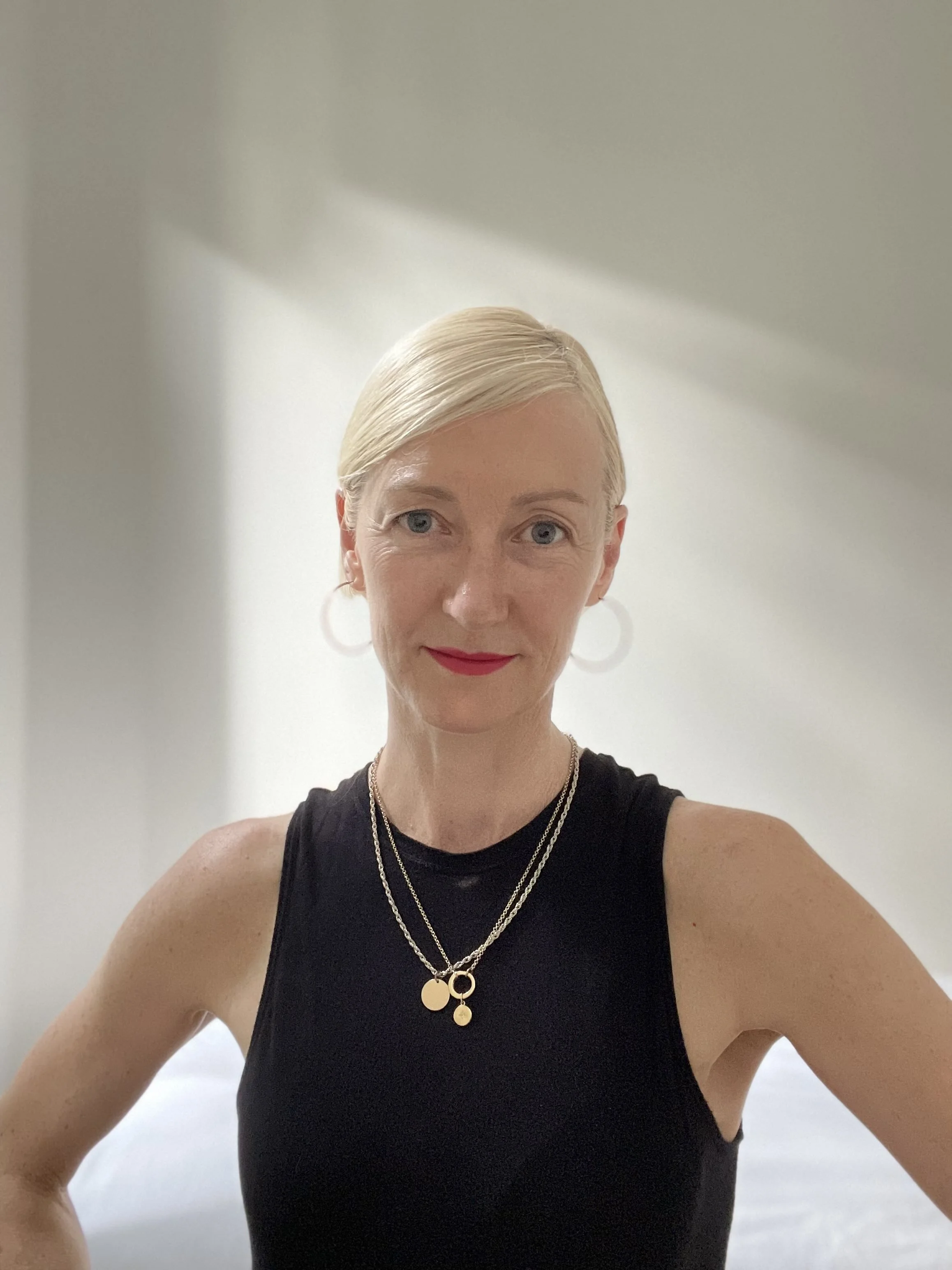
Prue Lang, dancer and choreographer.
As someone who has always been fascinated by dance and choreography, I was curious to learn more about an art form that sits between instinct and precision. Dance feels deeply human because it is expressed through the body itself, yet speaking with the dancer and choreographer Prue Lang made it clear how movement can also become a way of understanding the wider world. Born, raised and trained in Australia before moving to Europe to work, Prue developed a practice shaped by a fascination with nature, biodiversity and the sensory experiences of the landscapes she grew up in, all of which later influenced her artistic vision. Her fascination with non-human bodies, especially the octopus, the way it moves, senses and responds to its environment has opened new possibilities in her understanding of movement. This openness runs through her entire approach. Rather than seeking uniformity, she is interested in the individuality of each body and the unique qualities every dancer brings to a work. Difference is not something to be overcome, but something to be explored and learned from. Through experimentation, she plays with rules and conventions, testing their limits and discovering the unexpected possibilities that emerge in between. Although Prue does not describe her work as explicitly political, I was struck by how powerfully it encourages a deeper understanding of difference. As she learned during her years working with William Forsythe's company, one of the most inspiring aspects of her practice is the constant questioning of things: looking at material from different angles, testing new approaches, reshaping, rethinking and remaining open to discovery.
How would you introduce yourself?
I’m a choreographer. I was born in Australia and left when I was 23. I spent 18 years living and working in Europe, then about 10 years back in Australia, and now I’m in Europe again. So I think of myself as more international than anything else.
Could you share some key moments from your journey that led you to where you are today?
When I look back now, I think my childhood in the Australian bush was just as influential in shaping me as a choreographer as my formal dance training. I grew up surrounded by nature, spending hours outside climbing trees, exploring, and inventing games with my siblings and friends. There was no internet and very little TV, so a lot of my imagination came from being outdoors and engaging directly with the environment.
There was also a lot of clay in the area where I lived, and my grandfather was a potter. So, I have strong memories of feeling clay on my hands and feet, playing and creating with what was around me, discovering plants that looked like animals and birds that looked like plants. I was really fascinated by biodiversity, textures and sensory experiences.
Of course, my dance training was also an important part of that journey. I started in a small suburban dance school, then moved into more serious training, which eventually led me to study at VCA and join Australian Dance Theatre. But the curiosity, imagination and sensory awareness that drive my work today were already there in those early years.
I was also one of those kids who couldn’t sit still. I understood the world through movement, touch and perception. I loved creating structures, inventing games and exploring new ideas and spaces. Dance school felt like a natural extension of that curiosity.
I didn’t come from an artistic family at all, and my parents didn’t see dance as a “real job”. So when I chose to pursue dance professionally, there was no safety net. The determination to prove that I could build a career really fuelled me, especially at a time when dance in Australia wasn’t widely seen as a respected or sustainable profession.
What has been the greatest challenge in your career, and how has it shaped or influenced you?
One of the toughest early challenges came when I was about 14 or 15 and auditioned for The Australian Ballet School. I was a very strong dancer, technically capable, expressive, with great coordination, but anatomically I had very little turnout and limited flexibility. Part of the audition involved being assessed by a physiotherapist, and because of my anatomy, I was rejected. It felt profoundly unfair because artistically and technically I could do so much – I could jump higher than others, turn well and really dance. That sense of injustice was huge. But in hindsight, it redirected me toward contemporary dance, where many kinds of bodies are welcomed and individuality and creativity are valued. I thrived there.
The irony is that many years later I ended up dancing in one of the most radical ballet companies in the world, William Forsythe’s Ballet Frankfurt. There, I was doing six ballet classes a week and touring internationally with this extraordinary company. I came to ballet through an entirely different path, one that ultimately suited me far more and was incredibly rich and creative.
Another major challenge was moving to Europe at 23, long before the internet made communication easy. Navigating different languages, cultures and systems was tough. Being so far from home meant that when big things happened – illness or death – you couldn’t just fly back. That distance was emotionally difficult, and in a way, it still is. I’m now part of a French–Australian family, and we’re constantly navigating life between two continents.
Financially, it has also been extremely challenging. I’ve spent most of my career as a freelancer. Only eight years of it have been in salaried roles, the rest has been independent work. There are periods of abundance and periods of scarcity. It tests your commitment and the depth of your love for what you do.
As a choreographer, how would you describe your approach to movement and creation?
My approach today is influenced by my diverse training background: classical ballet, release technique, somatic practices, Alexander technique, jazz, musical theatre, hip-hop, martial arts, tai chi, budo, butoh and a wide range of improvisation methodologies. All of these have informed my approach to movement. My definition of contemporary dance is very expanded. I see it as an infinite space of movement possibilities.
Even though my training is broad, my choreography is still quite rigorous and precise. The conceptual focus shifts depending on my creative inquiry: sensory experience, ecology, philosophy, feminism, re-thinking gender roles, re-thinking ballet, the sensory perception of animals and plants, biomimicry, etc. The work also changes in response to the format – solo, duo or group – and the context, whether for stage, film, installation or museum, each offering its own challenges and possibilities.
A big influence in my recent work is the octopus. I’ve spent years developing a methodology inspired by the octopus’s sensory world, its ability to taste and touch simultaneously through its independently organised tentacles, and its capacity to change colour and texture in response to its environment. I find trying to think like a non-human body opens up enormous possibilities for movement and presence.
Collaboration with dancers is also central to my practice, especially because of what I experienced as a teenager – what I call a kind of “anatomical fascism”. I work to meet dancers how and where they are, embracing their physical specificities as a choreographic resource rather than something that needs to be shaped. Each dancer requires a different approach. One might need precise anatomical instructions, while another might need an imaginative prompt like “move your arm as if it’s a tentacle underwater” to find the same movement.
This sensitivity to each individual’s body and thinking creates long-term and meaningful relationships with dancers who feel empowered by the process. It’s one of my favourite parts of the work.
You have described dance as a form of embodied intelligence, a way to heighten perception and open new encounters with the world. What does this mean to you, and how does it manifest in your practice?
It’s very much about sensing before moving. If you imagine an octopus, whose suckers can both taste and touch, you start to understand how a body might perceive the world differently. If we move like that, how does the space feel or taste? How do we sense other bodies? What other ways of moving become available?
Embodied intelligence, for me, is about tuning into the body’s own wisdom: the elasticity of muscles and ligaments, the temperature sensitivity of the hands, and the many subtle systems working inside us. When dancers focus their attention on these different sensations, they can access deep instinct and discover new possibilities.
Many dancers haven’t been taught to trust this physical intelligence, but it’s incredibly powerful. You instinctively know when something feels wrong or right, or when something is about to become right. Working from the inside out creates healthier practices that are sustainable across different ages and bodies.
In my process, I guide dancers to redirect their attention to these physical insights and bring them into the choreographic process. It allows a different kind of clarity, connection and creativity to emerge.
In your pieces, diversity becomes a way to reveal new forms of virtuosity and has become a defining aspect of your work. How has your understanding of diversity evolved over time, and how has it influenced the themes you choose to explore?
When I first transitioned from dancer to choreographer, I was already working with some of the most highly skilled and nuanced dancers in the world (Ballett Frankfurt), which made the transition very easy. Later, as I choreographed across different countries and contexts, I began working with dancers from a broader range of training backgrounds, experiences and sensibilities. That really opened up my perspective.
I naturally gravitate toward performers who challenge traditional gender stereotypes, celebrating strength, sensitivity and complexity beyond conventional roles. For my last work, POESIS, I created solos specifically for Tara Jade Samaya and Benjamin Hancock, followed by duets with them together. Tara embodies extraordinary power: grounded physicality, strength and confidence in lifts and partnering, while Ben brings exquisite sensitivity, lightness and virtuosic skill in very high heels. I love combining these qualities because they disrupt the predictable gender norms we so often see in dance and because I love working with the alchemy that emerges between them.
Working with Jana Castillo was another turning point. Jana is an extraordinary performer, and she also has a complex movement disorder and is neurodiverse. I realised she needed a completely different process – different pacing, a different schedule, different structures. So we developed a working method around her needs, and the result was a deeply co-created piece that honoured her body and mind as they are.
Working with Jana was incredibly inspiring. I had never before understood that level of diversity within one person’s physical experience – how she sensed, thought and moved, how she could radiate such power, fierceness and presence, and how at other times her body will simply shut down.
This experience opened my eyes to how many different forms of intelligence and virtuosity exist within dance. It made me rethink what virtuosity can be and how much we can learn from different ways of sensing, thinking, moving and being. Many dancers with ADHD or other neurodiverse traits bring different forms of intelligence to the studio – hyperfocus, adaptability, deep attention to detail and a heightened sense of presence. I think this space is incredibly rich and we need to open ourselves to more diverse ways of practising and approaching dance.
I’m very interested in the relationship between brain and body in your work, as the interaction between rationality and instinct. Do you feel one side is more present or drives your practice more strongly?
Both are essential, but my strongest work often comes when I quiet my rational brain and amplify my instinct. Early in my career, I was influenced by French conceptual dance, which can be very intellectual. At times, I need to counterbalance that with more deeply intuitive and highly physical approaches.
My creative process is a constant yin and yang: zooming out to think conceptually about the work, then dropping back into the body to feel, sense and intuit. Recently, exploring the sensory perception of animals has made this even more interesting – often the body recognises something instinctively long before the mind understands it.
That tension between instinct and intellect is always present in my work.
Having lived and worked both in Australia and Europe, do you see contemporary dance as a universal language, or do you notice cultural differences in how it’s made or received?
It has changed enormously over time. When I first left Australia, there was far less access to choreographic research, fewer international influences coming in, and a much narrower range of movement practices and vocabularies visible in the country. The internet and global mobility shifted that dramatically.
Even so, there are still clear cultural differences in how people think about and approach contemporary dance. When I returned to Australia more recently, I realised there were certain principles, physicalities and ways of working that dancers had not previously encountered, so I needed to introduce these to the dancers I was working with, for us to collaborate effectivly. I also found that choreographic language is not always “read” in the same way by some critics and audiences, which made me question the idea that dance is a universal language.
At the same time, what Australia has – and what is extraordinarily powerful – is First Nations culture and dance. It’s a profoundly rich and sophisticated movement tradition. In many ways, I think it is one of the strongest and most important expressions of dance in Australia today, and always has been.
When it comes to what we usually call “contemporary dance”, having lived in Europe for so long, my sensibilities have been shaped by the work and dance thinking practised here. Consequently, in a very subjective way, I find myself more inspired by the work I see in Europe.
Do you see choreography as a political act?
Absolutely, it can be. Choreography has the potential to be profoundly political.
Years ago, for example, I created a work called Un Réseau Translucide (A translucent network). At the time, my environmental concerns were becoming so present in my life that I felt I had to address them in my choreography. I set myself the challenge of creating a completely sustainable dance performance that could run on its own energy.
The dancers and I pedalled on a bicycle onstage that generated all the stage lighting. One of us was always pedalling. I also collaborated with a woman who invented energy-harvesting clothing, so we developed costumes that could generate energy for the sound. Rather than simply performing outdoors in daylight, I wanted to keep working in a theatrical setting, with lights and electronic music, but explore how dancers could produce the energy needed to sustain it. Since we’re moving anyway, how could we convert that movement into power?
For the set, I used something extremely simple: 16 locally made macarons arranged in a grid. As the dancers ate them, they provided the calories needed to dance, which in turn produced the energy for the sound and lighting. The disappearance of the grid (macarons) then informed the choreographic structure and language. The whole performance became a visible, literal network of inputs and outputs, energy consumption and production.
It was an experiment, and following the show I organised a panel about sustainability in the performing arts, as well as implementing the first Green Rider for theatres. The French Ministry of Culture has since written an article about me being a precursor of environmental dance – this was 15 years ago. At the time, it was surprisingly political because theatres in France didn’t want to talk about these issues. When I first proposed the piece, many thought it was silly. “Just turn the lights on”, they said. But the work opened up a genuinely meaningful political conversation and generated concrete actions.
My more recent work POESIS also has a political dimension, though in a different way. I’m interested in exploring the sensory perception, the umwelt, of animals. If we remain within a purely human-centred perspective, our attempts to “fix” the environment will always be limited. We need to understand how other living beings perceive the world in order to coexist more intelligently. Dancers are some of the most sophisticated specialists in physical perception on earth, which is why this fascinates me choreographically.
Another layer is sensitivity. In POESIS I work a lot with textures meant to heighten how we feel, how we sense and how we touch the world and each other. We’re living in a time of violence, protest and resistance, and sensitivity can itself be political. It suggests alternative ways to move, to relate, to gather, to navigate resistance and to listen more deeply. It allows us to better understand differences.
So choreography isn’t primarily political for me, but it can expand into that territory, opening up resonances and important questions that extend far beyond the studio or stage.
You’ve worked with William Forsythe, one of the most influential figures in contemporary dance. What did you learn from that experience, and what aspects have you transformed into something uniquely your own?
Working with William Forsythe at Ballett Frankfurt felt like stepping into a giant laboratory. The studio was buzzing with ideas, constantly moving, shifting and evolving. It was deeply intelligent work, but the thinking happened primarily through movement rather than discussion. It was this incredible mix of physical research, intuition and real-time creation.
I had never been in an environment so stimulating. I felt like I had finally found my creative home, alongside 35 extraordinary artist-thinker-performers. Forsythe’s work had always fascinated me when I watched it from the outside, so being inside that world, and collaborating and creating new pieces there, was incredibly inspiring. The work was both analytical and poetic at the same time - very precise but also open, experimental and alive. That combination really changed the way I understood dance.
One of the biggest things I learned was not to limit what dance can be. I realised that movement can hold so many possibilities: you can be extremely precise and virtuosic and at the same time completely free. That sense of expansion really shaped me. It made me think a lot about how to empower dancers so they can feel expansive in their bodies, resonant and fully in charge of their own performance and ideas.
Another important lesson was the value of constantly questioning things: looking at material from different angles, trying new approaches, reshaping and rethinking. Nothing was ever fixed or set in stone. Even when a work was finished, we kept re-investigating it, renewing it every time we performed it. That mindset has stayed with me.
It also inspired a project I’m working on now, my Experimental Ballet Laboratory, where I explore classical vocabulary with ballet-trained dancers and stretch it, pull it apart, play with it and transform it. I think ballet today needs new energy and new ideas, and this is my way of contributing to that evolution.
Finally, something that really stayed with me was the power of the collective. The dancers inspired each other constantly. Someone would try something new and suddenly everyone else would want to explore it. There was so much respect and curiosity in the room. Forsythe had this unique gift for bringing out the absolute best in each dancer, and that’s something I carry with me in my own work: creating environments where people feel supported, challenged and able to grow.
Is there a dream project you’ve always wanted to realise, but haven’t had the chance to yet? What would it look like?
Plenty! A dream project I’d love to realise would bring together different genres and approaches to dance and push this exploration further on a much larger scale. I already have some exciting projects in the pipeline, but I can’t say more about them just yet.
A real dream would be to bring together my “dream team” in one place and at one time – without the usual constraints of budget, time and have a deep creative process together. Every artist has their own version of this: the dancers, designers and composers they would choose to collaborate with, and the opportunity to follow ideas as far as they naturally want to go.
I’m particularly interested in choreography for film, and it feels like the medium where I could expand my practice in new ways. To create a dance film with my dream team would be incredibly powerful – visually, physically and creatively – with that shared sense of collaboration and discovery.
Name a person that inspires you or that you admire.
One person who has deeply inspired me is Jana Castillo. She has an extraordinary ability to create from her own physical reality with such strength, intelligence and joy. She remains one of the most fierce and wonderful artists I’ve ever collaborated with.
“Dear Jana
You are a true inspiration to me on so many levels—a fierce and powerful performer, a stellar creative collaborator and a gorgeous human. Artists like you are rare, and I feel so lucky to have had the privilege of working with you.
Thank you for your amazing generosity and complicity. You have brought me invaluable insight and opened my eyes to new perspectives. You are a true force, blazing meaningful trails in our field.”
