

Sarah Davies AM
Stranger #18
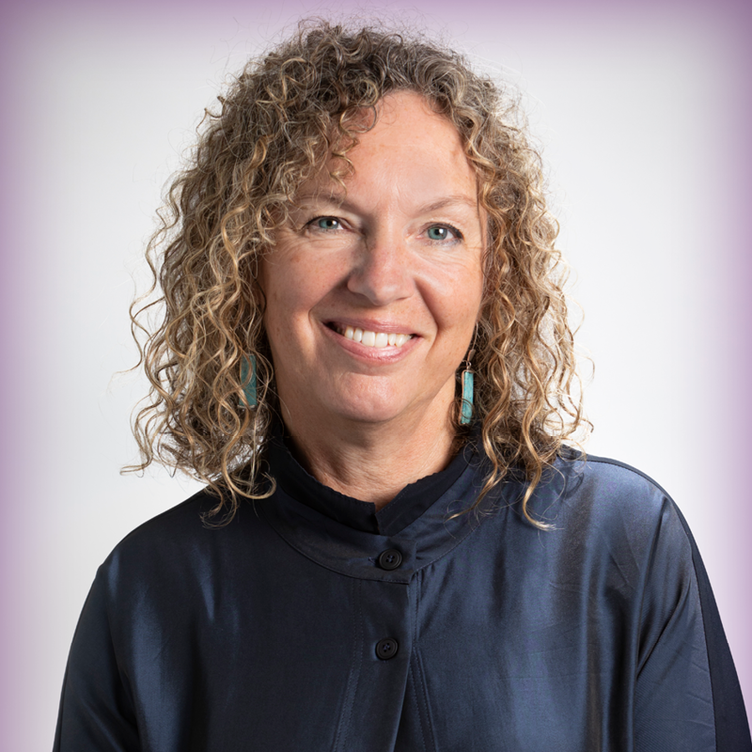
Sarah Davies AM, CEO of the Alannah & Madeline Foundation and former CEO of Philanthropy Australia.
Having a conversation with people like Sarah Davies is incredibly motivating. Some people have the rare ability to spark energy and possibility in others and Sarah is definitely one of them. What struck me most during our conversation was the way she spoke about complex topics as inequity and social change with such clarity and confidence. Since she was young, she learned to respond to unfairness not by complaining, but by doing something about it. To look for solutions, even when they seem difficult or far away. As she says, “nothing is impossible forever.” Throughout the interview, Sarah returned often to the idea that we all have both the agency and the responsibility to help change the context around us, and around others, to create fairer opportunities for everyone. I will always feel drawn to and inspired by people like Sarah Davies. I left our conversation with a stronger sense of my own capacity to act and of the possibility that even small actions can eventually shape bigger change. Maybe, as Sarah says, that’s how we eventually begin to change the rules of whatever game we want to play in.
How would you introduce yourself?
I’m an ordinary person. I’m a mother and a wife and a sister and a friend and a neighbour. I’m lucky enough to both work and spend my discretionary time doing things that matter to me, which is really about building community and collectively trying to create real, sustainable change where we need it. For me particularly that’s around social justice, inclusion and equity.
You’ve had a wide-ranging career across education, consulting, and leadership roles in Australia and overseas. What led you to focus on philanthropy and social change over the past 20 years? Were there any key turning points along the way?
I think there were three main things.
The first is a very strong belief that the time and place and context of a child’s birth has a huge impact on their life opportunities and trajectories. I’ve always felt that is instinctively unfair if those opportunities are curtailed by circumstances beyond their control. Tim Costello talks about the serendipity of longitude and it’s the same idea. Who you are, who you’re born to, where and when you’re born can shape your whole life.
I was born in East Pakistan, now Bangladesh, in a convent that supported women and children who had been excluded from their communities. It also provided basic medical care to nearby expats, which is why I was born there. It has always stayed with me that if I had been born to the woman in the next room my life would have been completely different. I’ve never been able to see that as fair or equitable. You can’t change those starting points, but you can change the context around a child’s life.
The second influence was my parents. They were community builders, progressive and deeply committed to education and to supporting others. We always had people coming through our home and they were very active in creating community infrastructure. My dad had a simple response whenever I said something wasn’t fair: what are you going to do about it? That really shaped me. It created both a sense of responsibility and a belief in agency.
I remember being 12 or 13 and deciding it wasn’t fair that our local sports club only ran discos for over 16s. My dad’s response was the same, so I got some friends together and we organised our own under 16s discos. It was a small thing, but it was an early lesson that you can act on what you think isn’t right.
The third is that over time I’ve seen that when you step into something, you often become part of something quite extraordinary. You learn a lot and you can create real change. You might not shift entire systems quickly, but you can change environments and opportunities for individuals, families and communities.
What has been the greatest challenge you have faced and how did it shape you?
There are so many challenges. Some happen to you over which you have no control or agency and some of them can be pretty awful. There’s the challenge of how you survive them, physically or mentally, and then how you frame them and how you let them shape you. Everybody has that kind of experience at different times and I’m no different.
Then there are challenges you’re aware of and either choose to ignore or choose to step into. Those feel different, particularly when you choose them, because you own that decision. You step in for a reason, with a view about why it matters. From a professional perspective, I’ve chosen to work in the charity sector. I love it and I couldn’t do anything else, but it is challenging. There are implications for that, for me and for my family, in terms of what life looks like, what keeps you awake at night and the pressures that come with it.
There are also situations where something just doesn’t feel right and you make it a challenge. You explore it, not to make life difficult, but to understand it better. The more you engage, the more complex it often becomes. Sometimes it leads somewhere meaningful and sometimes it doesn’t.
Over time I’ve realised that very little is black and white. Most things are grey. With that comes experience, lessons learned and a kind of resilience. You gather people around you, colleagues, friends and mentors, who help you through. Sometimes you get great wins and you change things, sometimes you don’t. Challenges are part of everyday life and it’s really about the relationship you choose to have with them.
I’ve always believed that we’re all born with the ability to live whatever kind of life we want, but for some people that ability is restricted by circumstance, by things that happen to them or by the environments they grow up in. In that sense, I think we all have a responsibility to help restore that ability, especially for children and young people.
I’ve been lucky to grow up surrounded by strong communities, friends, family and neighbours who share values and support each other. When one of us falls, others step in and help us back up. That support matters, as does the belief that nothing is impossible forever. I carry a quote from Nelson Mandela with me: “It always seems impossible until it’s done.”
How do you see philanthropy evolving today?
Philanthropy, in its truest sense, means a love of humanity and I think that has always been there and always will be. For me it comes back to that interplay between responsibility and ability. We find meaning and purpose through family, community and each other, so there’s something very fundamental about it. Philanthropy isn’t just about wealthy individuals giving away money. It’s about building a shared vision of the kind of world we want to live in and contributing to it in whatever way we can. In that sense, I hope the core of philanthropy never changes.
What has changed is how it’s practiced. Over the past 10 to 15 years in Australia, philanthropy has become more confident and more visible. There used to be a reluctance to speak openly about giving, partly because of the tall poppy syndrome, but that’s shifting. There’s also a deeper understanding of what it takes to create meaningful and sustainable change, whether social, cultural or environmental, and that’s influencing how people approach their work.
We’re seeing a real maturation of the sector. There’s more collaboration, better tools and stronger infrastructure to support that collaboration. Technology has made it easier to share data and learn from each other. Areas that were once less supported, like advocacy, are now recognised as legitimate and powerful ways to drive change. At the same time, I think Australia could be more philanthropic. I’d like to see more people participate. Not because people are unwilling, but because it may not always feel accessible. Philanthropy gives you much more than you give away, and I’d love to see more people feel encouraged to take part, even in small ways.
We’re also in the middle of a significant intergenerational wealth transfer. Trillions of dollars are moving from one generation to another, often without creating broader value. That presents a real opportunity to direct some of that wealth towards creating positive impact for the wider community.
What’s your approach to building and nurturing communities?
I think the first thing is that we are all part of a community, whether we choose to engage or not. If we don’t engage, then maybe our community isn’t very healthy, but if we do, that’s how you start to build it. It can be as simple as inviting your neighbours in for a cup of tea or a glass of wine, or helping someone you pass who looks like they need it. It’s really about being present.
Then as you get to know people and the place you’re in, you start to understand its assets and strengths, and also its challenges and what people would like to see change. From there, you bring those things together. You use the strengths of a community to respond to what isn’t working and you give it a go. That might look like volunteering with Clean Up Australia to look after your local park or streets or beaches. It could be starting a giving circle, providing meals, or something completely different. The first step is simply to engage. It starts small, and as you go, it becomes more complex, but you also become more skilled, more informed and more connected, together with others.
In your leadership roles within the for-purpose sector, how do you decide which needs to prioritise when supporting communities?
One of the things I’ve learned from working in philanthropy and the community sector is that whatever the issue or opportunity, there is always someone who cares about it. In a way, I’ve found that quite reassuring because it allows me to focus on the things I care about most, rather than trying to do everything. I know where I want to spend my energy, my time and my support, and for me that has always been around children and young people. That doesn’t mean other areas aren’t important, but I’ve seen that there are people who are deeply committed to those spaces too, and that gives you a kind of permission to focus.
I’ve also found that when something really matters to me, no obstacle feels too big forever. It might feel overwhelming at times, but you find ways through, you reframe things and you keep going. That sense of commitment and tenacity comes much more naturally when you genuinely care. When I’ve worked in areas that are important but don’t connect with me in the same way, it’s much harder to sustain that motivation. So when people ask me about this, I encourage them to find what really matters to them. That’s where they’re most likely to have impact.
At the same time, I have the confidence now to know that across the sector, most things are being held by someone.
Working with disadvantaged communities can be complex, especially when external support isn’t immediately welcomed. Have you experienced this? How do you build trust and meaningful engagement in those situations?
I don’t think it’s specific to disadvantaged communities. None of us welcome support that feels imposed. It’s not about disadvantage, it’s about having the curiosity and the humility to get to know people before deciding how to help. In communities experiencing disadvantage, people know exactly what they need. It sounds simple, but it’s about listening, learning, asking and then supporting them to access the resources or changes they’re asking for. The idea that someone with authority, funding or control over resources automatically has the answers is deeply flawed. We still see well intentioned efforts that jump straight to solutions and skip those first steps. If you slow down and listen first, you’re far more likely to be helpful.
It is complex. Some people don’t even have the words to express what they need, especially very young children. That’s where for-purpose organisations play a critical role. They bring professional expertise, experience and practice knowledge. They can interpret behaviours, understand context and respond in informed ways.
Trusting the people who work closely with those communities is essential. Not everyone can or should step directly into a community and ask those questions, sometimes that would be inappropriate. But there are always practitioners and organisations with deep knowledge you can learn from. They help translate what’s needed and guide how to act in ways that respect agency and dignity. It’s complex and it varies across people, communities and cultures, but there is almost always a way forward if you take the time to listen and to work with those who understand the context. We’re very fortunate in Australia to have a strong and highly skilled charity sector that does exactly that.
A big part of your work focuses on supporting younger generations. What do you see as the main challenges young people face today compared to previous generations?
One of the best ways to answer that question is simply to ask young people themselves. We recently did that through research with Western Sydney University, led by Professor Amanda Third, looking at hope and resilience among young people in Australia. The research came from a frustration that so much of the public conversation focuses on what’s wrong with young people. Of course there are challenges, but there is also so much that is right.
What really stayed with me is a line from the report: their hopes are beautifully ordinary. They want to be healthy, to feel safe, to belong, to have a home, to be seen, and to have the opportunity to study, work, travel and build a life on their own terms. What creates anxiety is also very clear. Concerns about the environment, housing affordability and the role of technology, where it’s going and whether they are in control of it or it’s in control of them.
There is so much strength, clarity and optimism in young people. I think if we listened more carefully and created more space for them to speak, we would understand that better and respond more effectively.
What’s the most unexpected or surprising outcome you’ve witnessed from a philanthropic initiative?
There are so many. Things we take for granted today were born out of philanthropy, like the contraceptive pill. We see its impact everywhere, in education, in arts and culture, it’s part of daily life.
I think philanthropy’s superpower is that it can act as social risk capital. It’s one of the few sources of funding in the social change space that can take real risks. Public money has clear constraints, but philanthropy can experiment, try new approaches and accept that not everything will work. That freedom is what allows new ways of thinking and working to emerge.
I see it every day in very tangible ways. There are children meeting with clinically trained trauma therapists, receiving intensive, long-term support. Their families are involved, their teachers are supported and the work continues over many months to help them heal. Without philanthropy, that simply wouldn’t exist.
We’ve also seen its impact at a broader level, for example during the marriage equality campaign, where philanthropic funding supported public education, storytelling and accessibility. From very personal interventions to large-scale social change, philanthropy plays a role every day.
Is there a dream project you’ve always wanted to work on but haven’t yet had the chance to realise?
There are many. Over time, working in the sector, you start to see patterns. You can have incredible programs that create real change for individuals and families, but if they sit within systems that are broken, it can feel like pushing a rock uphill. Where I’ve got to now is that my dream project is really about changing the rules of the game.
One area is technology. I think we’ve gone too far in allowing tech companies to operate without enough accountability for the impact of their products. We’re starting to respond with protective measures, like delaying access to social media for younger people, but I’d like to see that flipped. I think companies should be fully accountable for the products they create, just like in any other industry. If a toy manufacturer knowingly produced something that harmed children, it wouldn’t be allowed on the market. Yet we allow digital products that we know can cause harm.
Another area is early childhood. I think the early years sector in Australia needs much stronger focus on both safety and quality. You can’t have one without the other. I’d like to see a different approach that ensures children are safe, supported and able to learn in environments with skilled and properly resourced educators, because children can’t learn until they feel safe.
So yes, I’ve still a lot to do! (laugh)
Is there a person who inspires you or has deeply influenced your journey?
Robert Fitzgerald. He’s had an extraordinary career, including his role as a Productivity Commissioner, and he’s seen and done so much. His ability to draw connections and share lessons from experience is remarkable.
Any chance I get to listen to him is a privilege. I think his reflections on patterns and lessons learned would be an incredible gift to many people.
